What Is Slab Leak Detection?
A slab leak occurs when a pressurized water supply pipe installed beneath or embedded within a concrete foundation develops a rupture, crack, or pinhole. Because the plumbing is buried beneath several inches of concrete and reinforcement steel, water escapes undetected into the sub-base gravel and soil before surfacing.
Whether you manage a residential home or commercial property in Whittier, catching water loss early preserves structural integrity and halts soaring utility costs. Learn more in our complete guide to water leak detection in Whittier, CA.
Seeing these signs? Don’t wait for the damage to spread. A local pro can pinpoint the leak before anything is opened up.
Call (562) 245-5818Signs You May Need Slab Leak Detection
Warm or hot spot on the floor
Most often a hot-water line leaking beneath tile, wood, or carpet. Pets sometimes find these spots first.
Water running when everything is off
A faint hiss or trickle you can hear near a wall or floor, especially at night when the house is quiet.
Meter moves with no water in use
The small leak indicator on the meter keeps turning after all fixtures, irrigation, and appliances are off.
Damp or lifting flooring
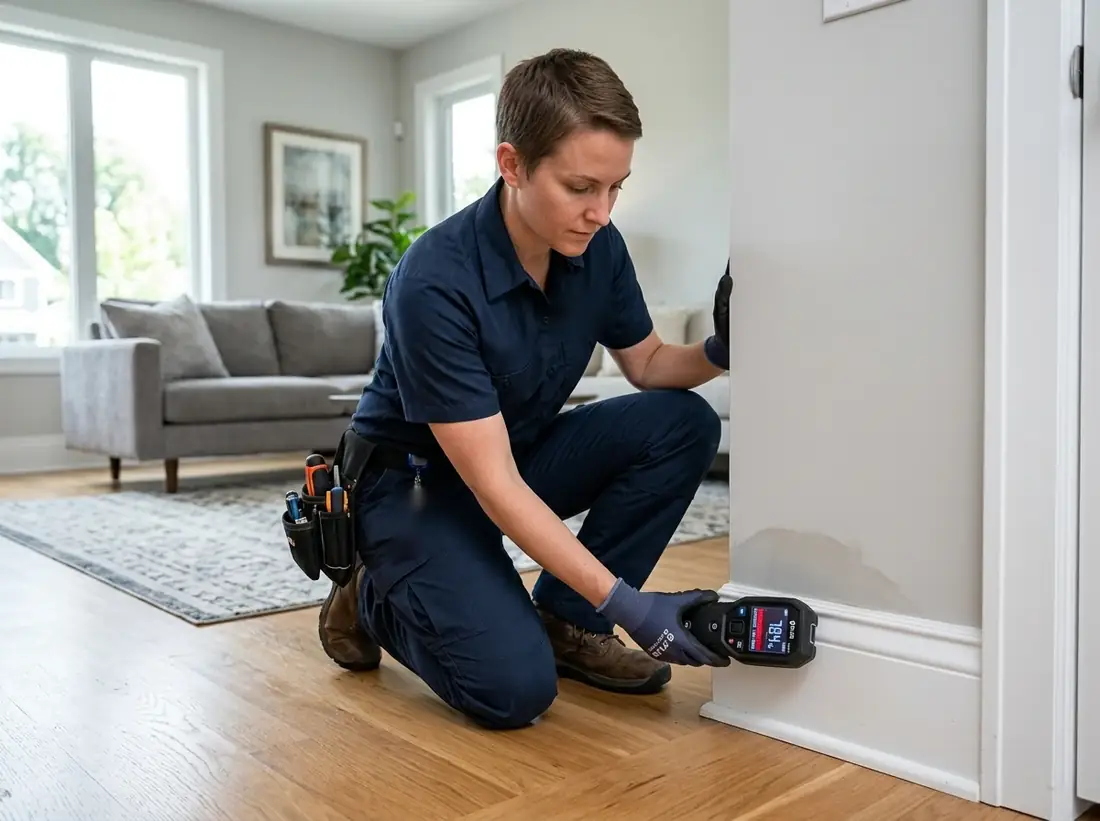
Swelling laminate, loose tile, damp carpet pad, or moisture along baseboards with no plumbing fixture nearby.
Water heater runs constantly
A hot-side leak forces the heater to keep refilling and reheating, which can also raise gas or electric use.
Lower water pressure
A sudden drop at several fixtures can mean pressure is escaping somewhere along a supply line.
How a slab leak is located
A careful provider works from broad to narrow instead of guessing and breaking concrete. A typical sequence looks like this:
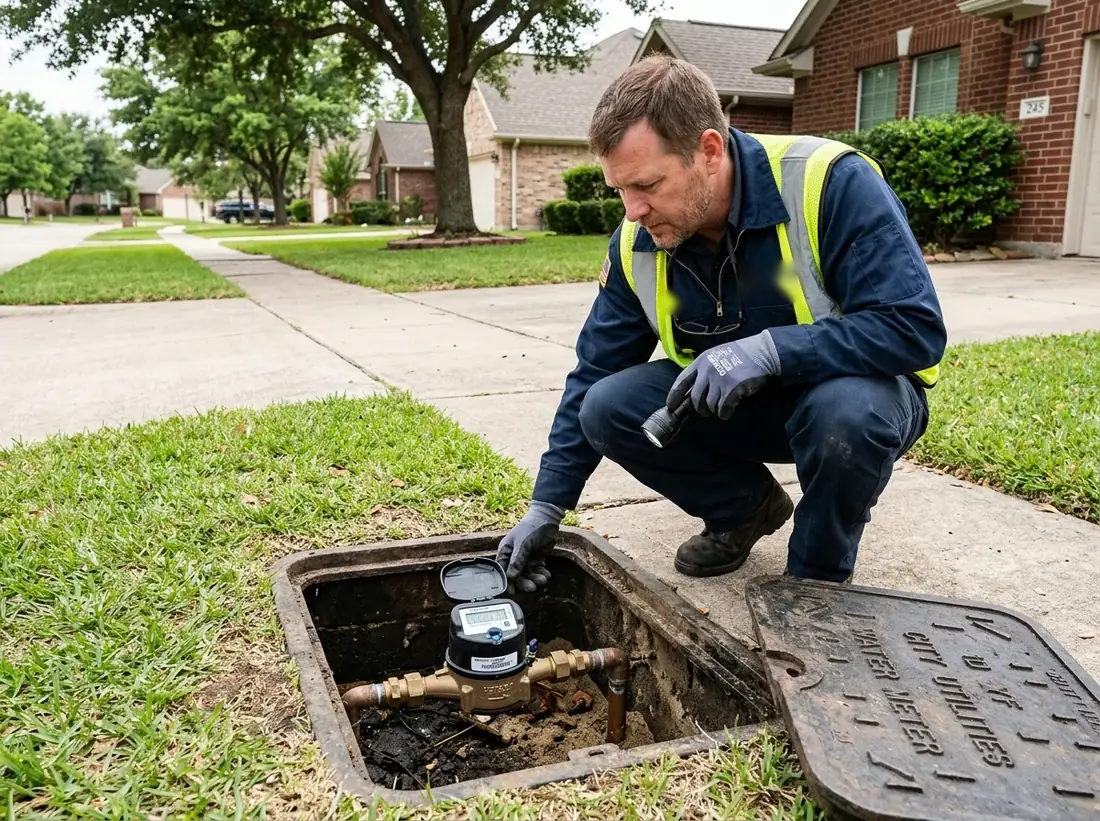
- Confirm there is a leak. With every fixture off, the water meter’s low-flow indicator is checked for movement.
- Isolate the side. Shutting the supply to the water heater, or testing hot and cold lines separately, shows which system is losing pressure.
- Trace the pipe route. Electronic line locators map where the line runs under the floor so the search follows the pipe, not the room layout.
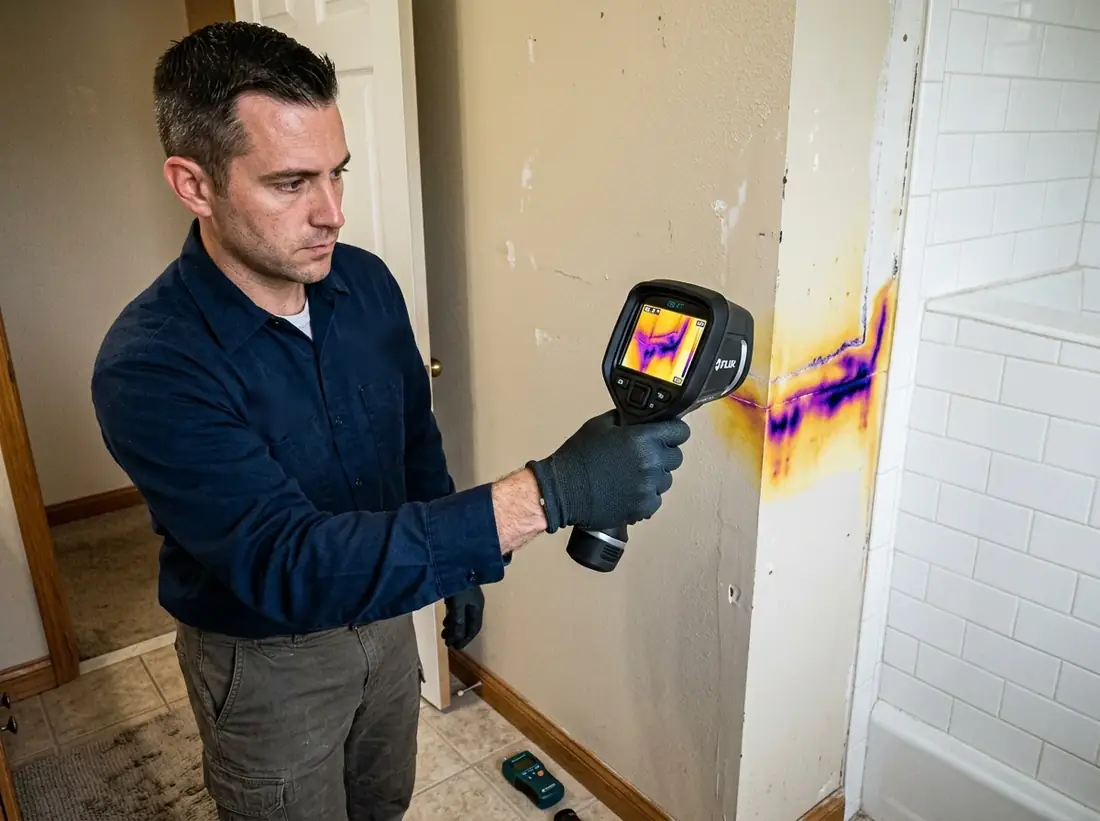
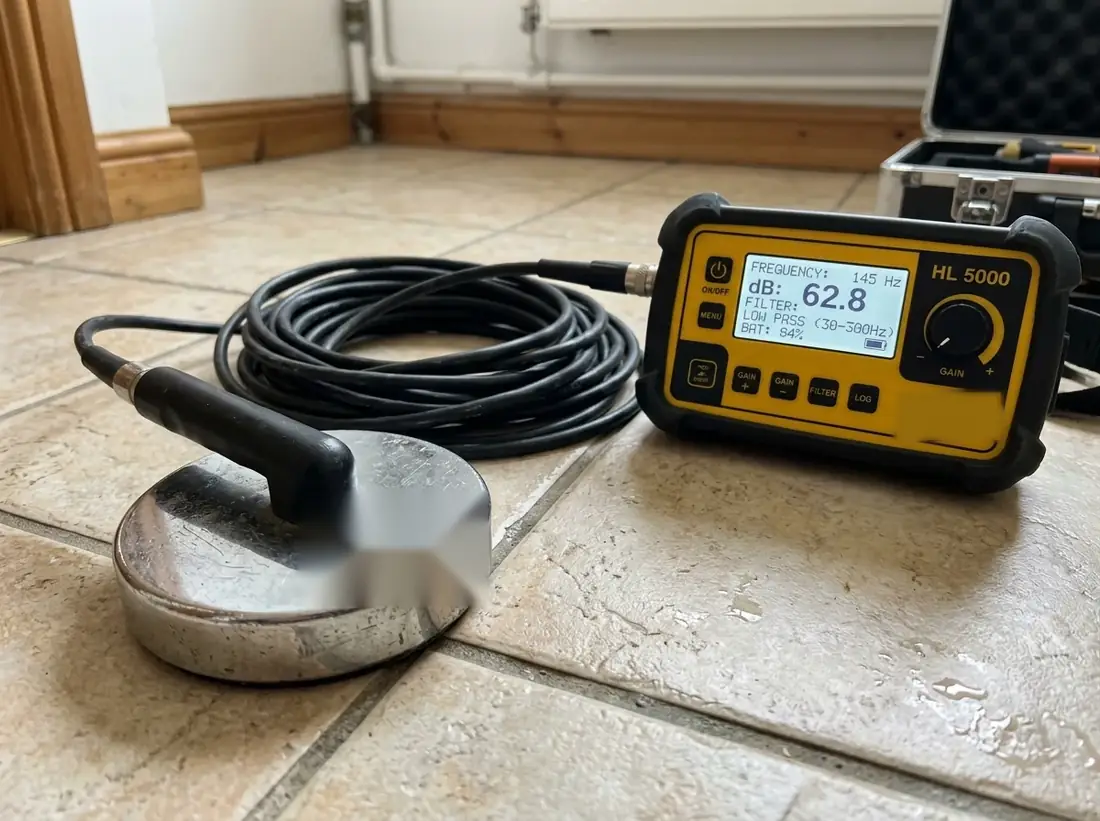
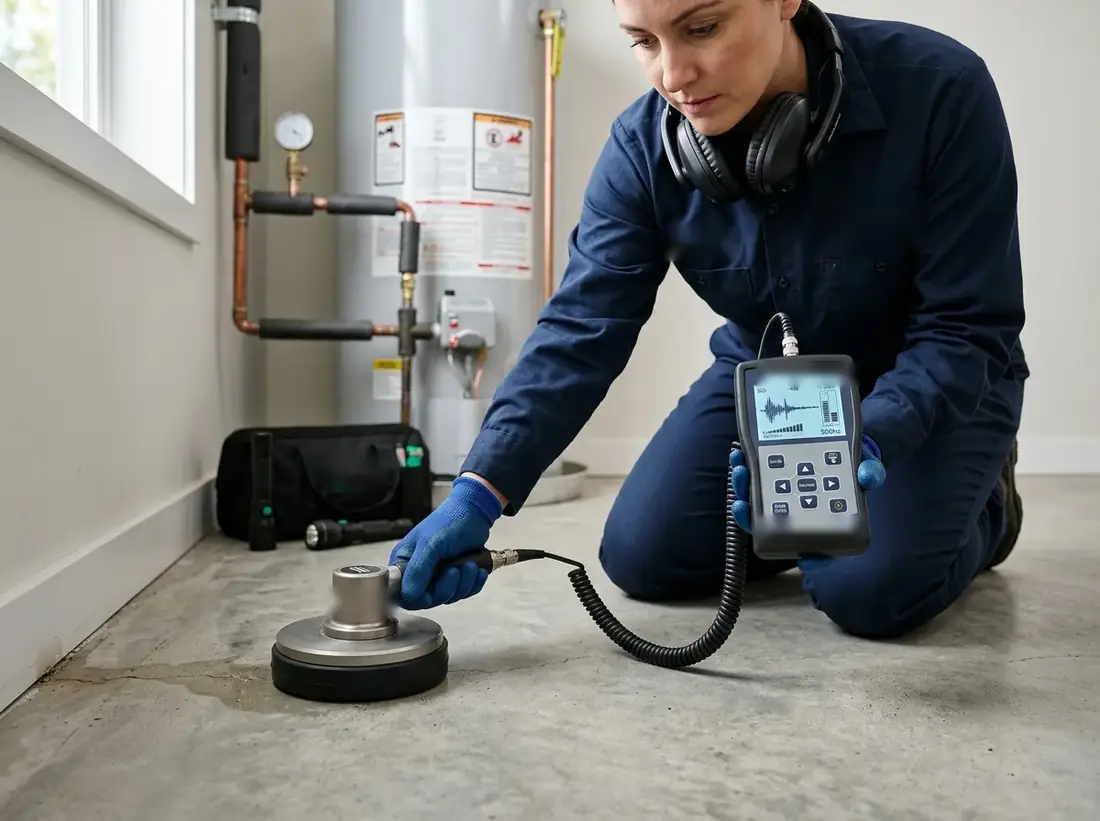
- Pinpoint the spot. Acoustic ground microphones listen for escaping water, and thermal imaging can reveal the heat signature of a hot-water leak. Some difficult cases call for tracer gas.
- Mark and explain. The suspected location is marked on the floor and the provider should explain how confident the finding is before anyone cuts concrete.
Repair options once the leak is found
Detection tells you where the problem is. The repair decision is separate, and there is usually more than one reasonable option:
- Spot repair — open the floor and slab at the marked spot, repair the pipe, then patch. Practical when the line is otherwise in good shape.
- Reroute — abandon the leaking section and run a new line through walls or the attic. Often considered when a line has leaked before or sits under hard-to-replace flooring.
- Repipe — replace the supply plumbing more broadly when the pipe shows widespread deterioration.
Ask for a written estimate that spells out whether flooring, drywall, and concrete restoration are included. Coverage for slab leaks varies a lot between homeowner’s insurance policies — many treat access and tear-out differently from the pipe repair itself — so it is worth calling your insurer early.
What you can do before the visit
- Find your main shutoff valve and your water meter box so you can show the technician.
- Note any warm spots, damp flooring, or areas where you hear running water, and when you first noticed them.
- If water is visibly spreading or damaging finishes, shut off the main and ask the provider whether the water heater supply should also be closed.
- Pull a recent water bill or two so you can compare usage.
Tools Our Specialists Use
- Electro-Acoustic Ground Microphones. Calibrated listening discs amplify the high-frequency vibration of water escaping from pressurized pipes beneath concrete.
- Thermal Imaging Cameras. Infrared thermography detects subtle surface temperature anomalies caused by hot water spreading beneath the foundation.
- Differential Pressure Testing. Pressure gauges isolate hot vs. cold supply manifolds to confirm which branch is compromised before physical testing.
What a Visit Usually Covers
- Meter and pressure checks to confirm the leak and isolate hot or cold lines
- Electronic mapping of the pipe route under the slab
- Acoustic and thermal pinpointing of the most likely location
- An explanation of the finding and repair options before any concrete is cut
Ready to find the leak? A local pro can pinpoint the leak before anything is opened up.
Call (562) 245-5818Slab Leak Detection Across Whittier
We take calls for slab leak detection in every Whittier ZIP code (90601–90610). Each neighborhood page explains the housing types and local conditions that affect how leaks show up there.
Slab Leak Detection FAQs
Can homeowner's insurance cover slab leak detection?
Many homeowner insurance policies cover the cost of 'tear-out' and access required to locate and repair the leak, as well as secondary water damage restoration, though coverage varies by carrier and policy. Confirm with your insurance agent.
Is direct slab repair better than pipe re-routing?
Direct spot repair involves chipping through the floor to mend the copper section. Re-routing abandons the compromised line beneath the slab and runs a new PEX line overhead through walls and attic, which is often preferred if copper pipes show widespread corrosion.
Is a warm spot on the floor always a slab leak?
No. Sunlight, heating ducts that run through some slabs, nearby appliances, and radiant heating can all warm a floor. A warm spot combined with meter movement or a constantly running water heater is a much stronger indicator.
Will they have to break my floor to find the leak?
Detection itself is generally non-invasive — meters, pressure gauges, line locators, listening equipment, and thermal cameras. Opening the floor usually happens only if you choose a spot repair after the leak has been located.
Can a slab leak stop on its own?
Not in any reliable way. A pinhole leak typically gets larger over time, and water under the slab can keep spreading under flooring and into walls while it runs.
Is detection quoted separately from the repair?
Often, yes. Ask the provider what the diagnostic visit costs, what it includes, and whether the repair, concrete work, and flooring restoration would be quoted separately.