What Is Thermal Imaging Leak Detection?
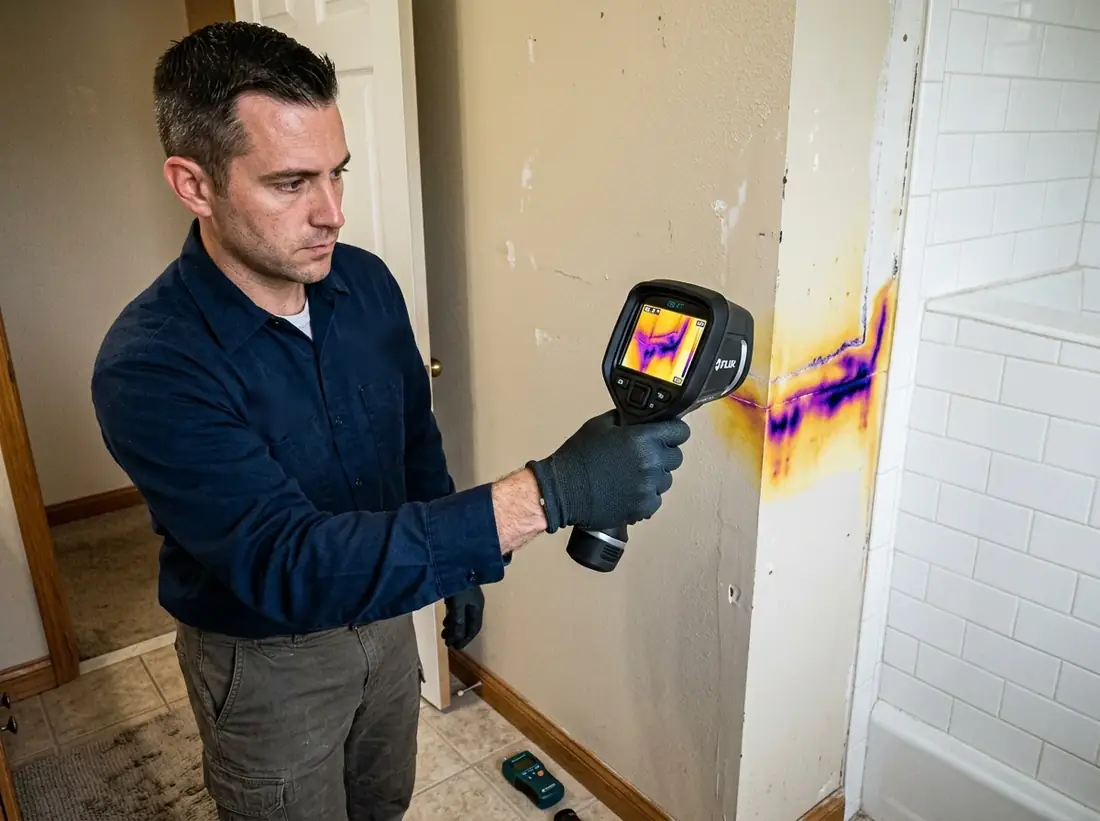
Infrared thermography converts invisible infrared radiation into a calibrated visual heatmap. Because water absorbs and radiates heat differently than dry construction materials—and because evaporating moisture produces localized cooling—thermal cameras reveal the outline of hidden moisture behind walls, ceilings, and under floors.
Whether you manage a residential home or commercial property in Whittier, catching water loss early preserves structural integrity and halts soaring utility costs. Learn more in our complete guide to water leak detection in Whittier, CA.
Seeing these signs? Don’t wait for the damage to spread. A local pro can pinpoint the leak before anything is opened up.
Call (562) 245-5818Signs You May Need Thermal Imaging Leak Detection
Suspected hot-water leak
Warm floor areas, a constantly running water heater, or higher energy use alongside water use.
Large area to check
A ceiling or wall stain where the source could be anywhere across a wide area.
You want to avoid opening drywall
Scanning first can focus any inspection opening on the most likely spot.
You need documentation
Images can help you show conditions to an insurer or a contractor.
What a thermal camera can and can’t show
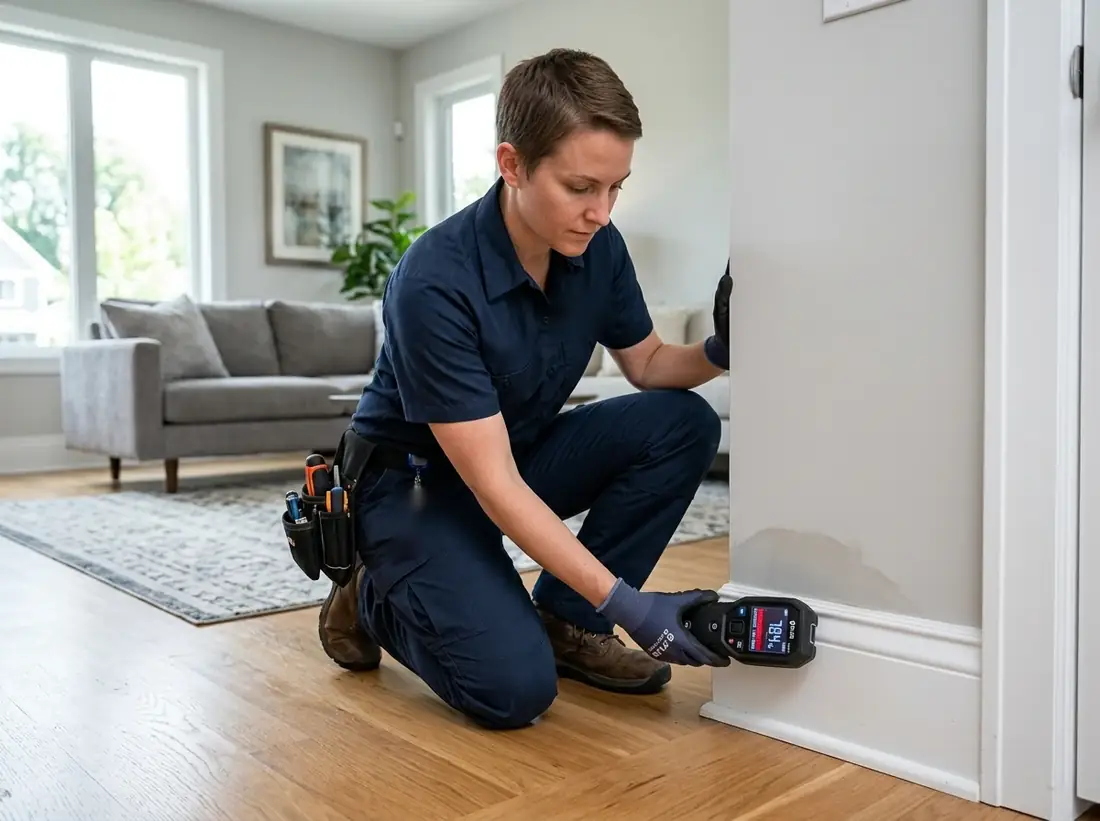
It is worth clearing up a common misconception: a thermal camera does not see through walls, and it does not detect water directly. It measures the surface temperature of whatever it is pointed at. A leak shows up only when it changes that surface temperature enough to stand out.
- Hot-water leaks are the easiest to spot. A leaking hot line under a slab or in a wall often creates a distinct warm plume.
- Cold-water and wet-material leaks can appear cooler than their surroundings because evaporation pulls heat away.
- Look-alikes such as studs, missing insulation, air leaks, ductwork, and sunlight can create patterns that resemble moisture.
That is why a reliable investigation confirms any suspicious pattern with a moisture meter or another method before reaching a conclusion.
Where thermal imaging helps most
- Tracing the path of a hot-water slab leak across a floor
- Scanning ceilings below bathrooms and laundry rooms for the edge of a wet area
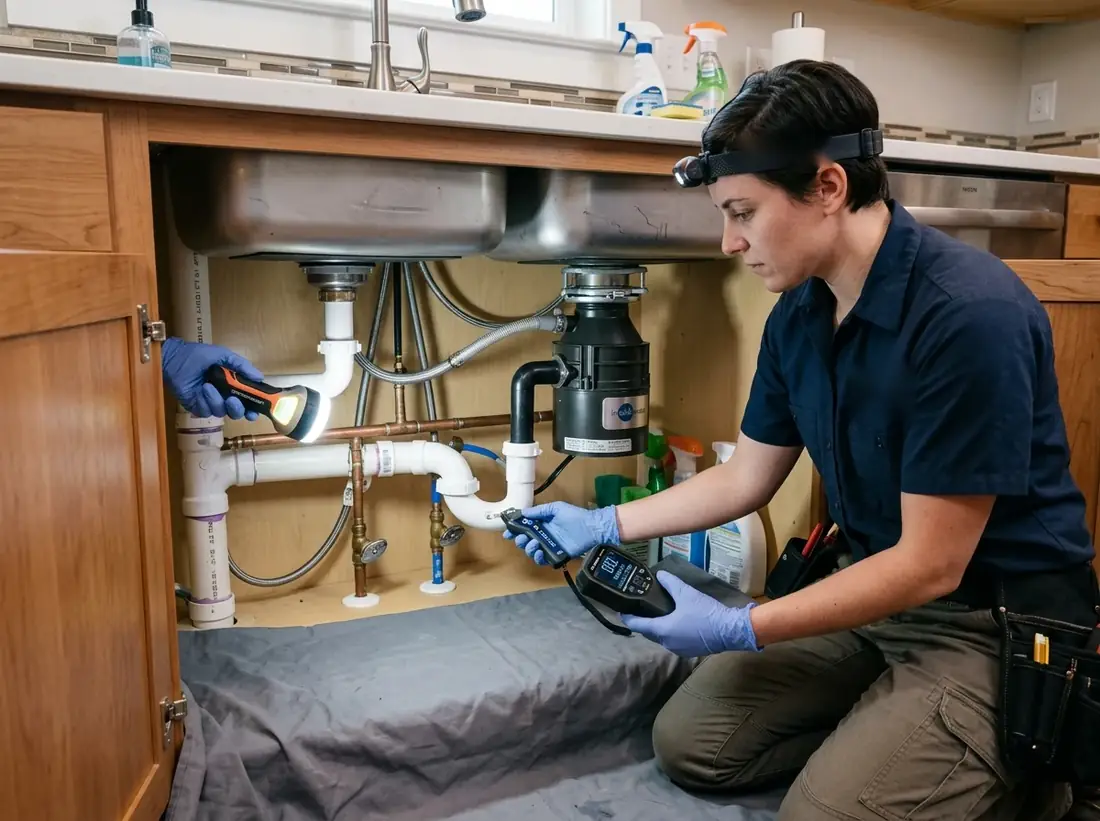
- Checking walls behind showers, tubs, and kitchen sinks
- Documenting conditions — thermal images can be useful when talking with an insurer, so ask whether images are included in the report
Getting good results
Thermal imaging works best when there is a clear temperature difference. A technician may run hot water through a line for several minutes to make a leak stand out, or ask that heating or cooling be adjusted beforehand. Direct afternoon sun on a wall or floor can wash out the image, so timing and conditions matter.
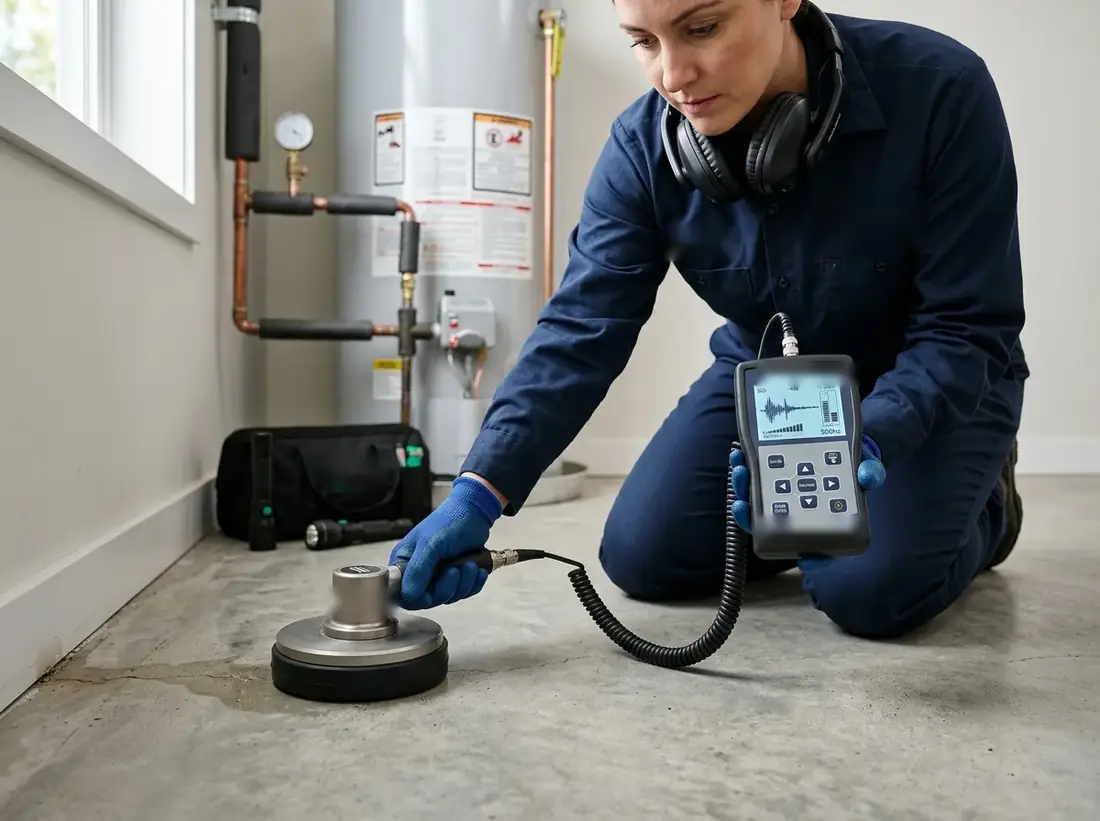
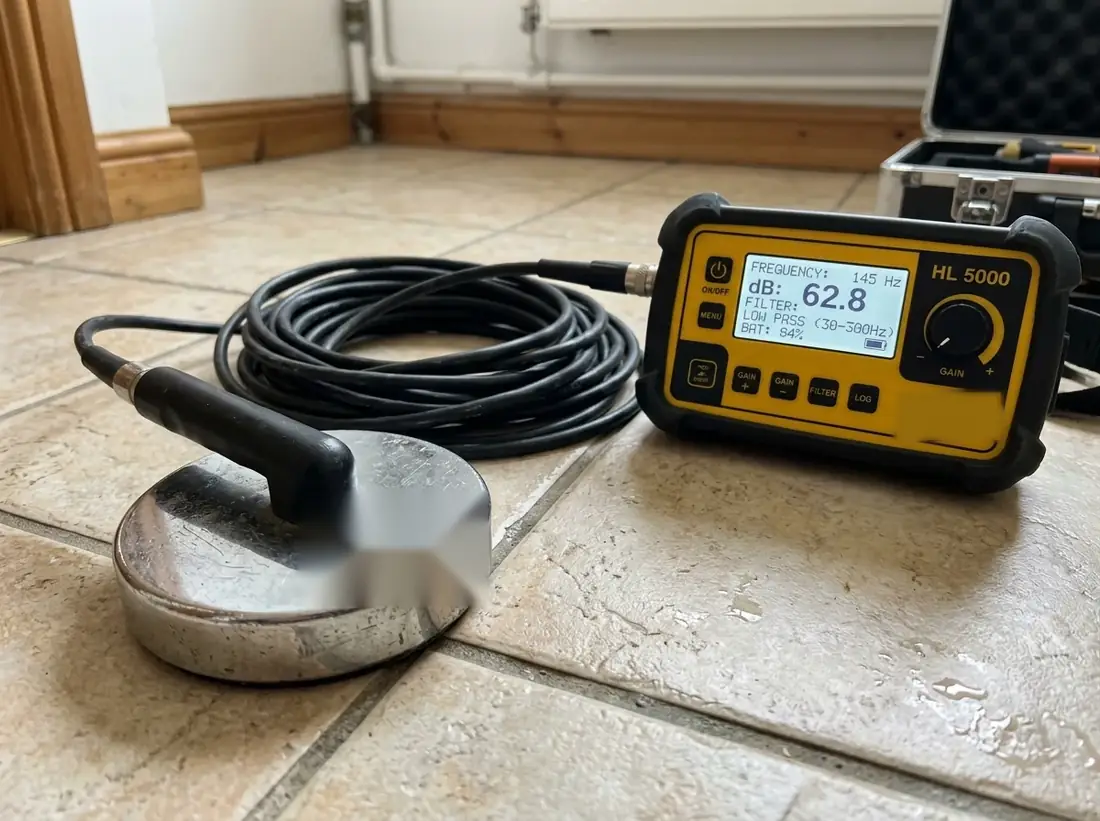
A thermal camera is a screening and pinpointing tool, not a complete investigation. It is most useful alongside acoustic listening, moisture meters, and pressure testing.
Tools Our Specialists Use
- High-Resolution FLIR Thermography. Detects thermal variances as small as 0.05°C to show moisture patterns.
- Thermal Heat Pulse Tracing. Briefly introducing hot water into supply branches to produce a visible thermal signature along pipe routes.
- Dual Thermal & Moisture Verification. Confirming thermal anomalies with pinless RF moisture meters to eliminate false thermal positives.
What a Visit Usually Covers
- Creating temperature contrast, such as running hot water through the line
- Infrared scanning of floors, walls, and ceilings in the affected area
- Moisture meter confirmation of any suspicious pattern
- Images and an explanation of what was and wasn’t found
Ready to find the leak? A local pro can pinpoint the leak before anything is opened up.
Call (562) 245-5818Thermal Imaging Leak Detection Across Whittier
We take calls for thermal imaging leak detection in every Whittier ZIP code (90601–90610). Each neighborhood page explains the housing types and local conditions that affect how leaks show up there.
Thermal Imaging Leak Detection FAQs
Can thermal cameras see through walls like X-rays?
No. Thermal cameras detect surface temperature differences emitted from the wall face. Moisture creates a distinct cooler or warmer signature on the surface of the drywall or flooring, revealing what lies beneath.
Can thermal imaging detect both hot and cold water leaks?
Yes. Hot water leaks show up as bright yellow/red heat zones, while cold water leaks show as dark purple/blue zones due to evaporative cooling and temperature differential.
Can I use a phone thermal camera myself?
An inexpensive camera can show interesting patterns, but interpreting them correctly is the hard part. Studs, ducts, and insulation gaps are easy to mistake for leaks.
Will I get the thermal images?
Many providers include images in their findings. Ask before the visit if you need them for an insurance claim.