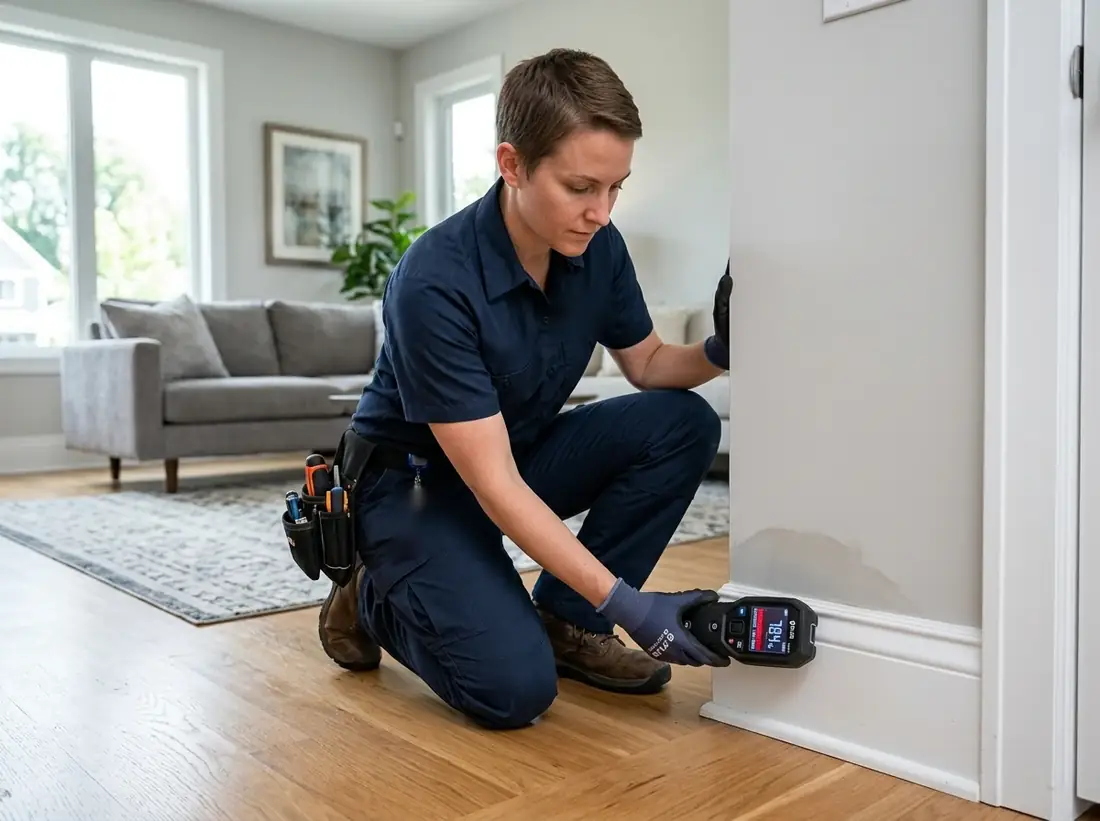
What Is Hidden Water Leak Detection?
Plumbing supply lines, drain stacks, and fixture valves often run behind finished drywall, inside ceiling cavities, and underneath subfloors. When a joint fails or an internal copper pipe develops a corrosion pinhole, water can seep quietly for weeks before surface staining or pooling becomes apparent.
Whether you manage a residential home or commercial property in Whittier, catching water loss early preserves structural integrity and halts soaring utility costs. Learn more in our complete guide to water leak detection in Whittier, CA.
Seeing these signs? Don’t wait for the damage to spread. A local pro can pinpoint the leak before anything is opened up.
Call (562) 245-5818Signs You May Need Hidden Water Leak Detection
Ceiling stains
Yellow or brown rings on a ceiling, often below a bathroom, laundry, or water heater closet.
Bubbling or peeling paint
Paint lifting on walls that share plumbing with a shower, tub, or kitchen.
Soft or warped drywall
Drywall that feels spongy, sags, or has swollen seams.
Musty odor
A persistent damp or earthy smell in a closet, cabinet, or room with no obvious cause.
Swollen baseboards or cabinets
Baseboards pulling away or the floor of a sink cabinet swelling and delaminating.
Stain grows after fixture use
A wet area that gets worse after showers or laundry often points to a drain or shower pan.
Where hidden leaks usually come from
Water inside a wall or ceiling can come from several very different sources, and the right repair depends on which one it is:
- Supply lines — pressurized pipes that leak around the clock. These typically move the water meter.
- Drain and waste lines — leak only when a fixture drains, so the stain grows after showers, laundry, or dishwashing.
- Shower pans and tub surrounds — failed waterproofing, cracked grout, or a worn valve trim that lets water behind tile.
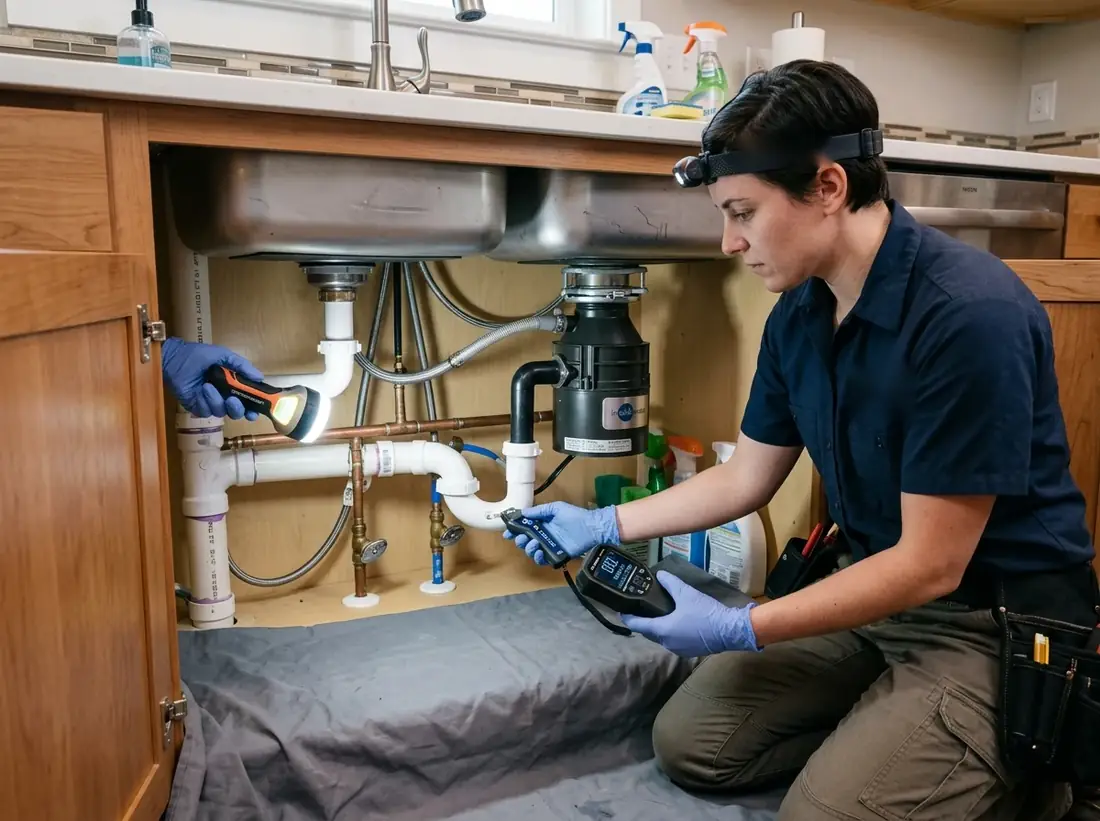
- Fixture connections — toilet wax rings, sink drains, and supply connections inside vanities.
- Non-plumbing water — roofs, windows, and HVAC condensate lines. If a stain only appears after rain, a plumbing leak may not be the cause.
How hidden leaks are traced
The goal is to identify the source from the outside of the wall before deciding where to open it. A provider will typically combine several approaches:
- Moisture mapping. Pin and pinless moisture meters measure how far the wet area extends and where readings are highest.
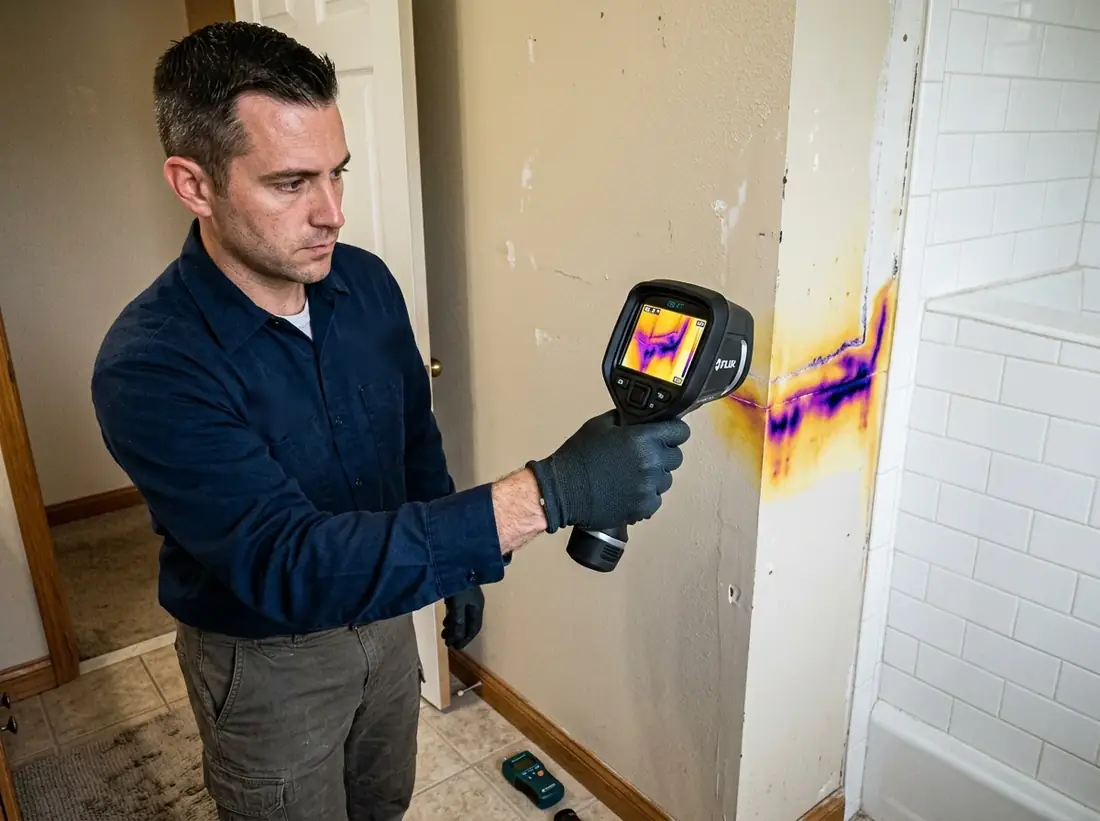
- Thermal imaging. An infrared camera shows temperature patterns on the surface that can point toward water — useful for checking a large area quickly.
- Fixture-by-fixture testing. Running the shower, filling and draining the tub, or flushing a toilet one at a time separates drain, pan, and valve leaks.
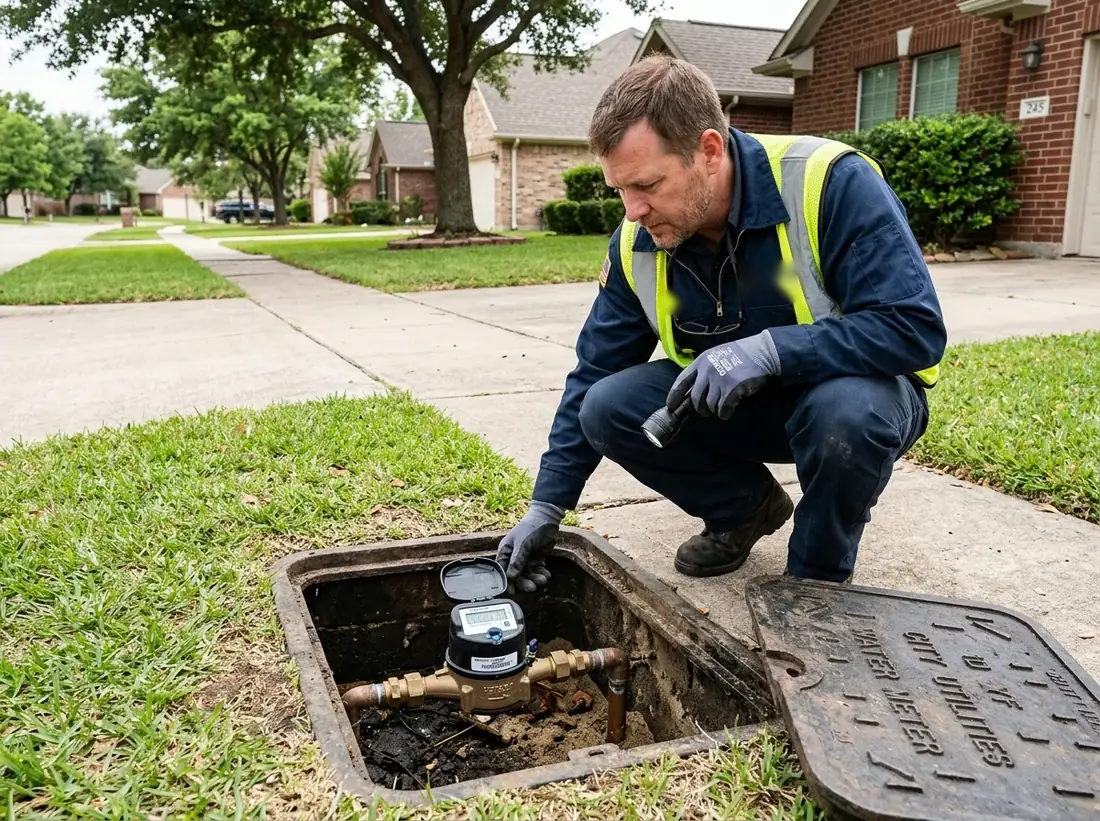
- Supply checks. A meter test or pressure test shows whether a pressurized line is involved.
Sometimes a small inspection opening is still needed to confirm the source. Ask the provider to explain where and why before any drywall is cut, and whether patching is included.
Moisture, mold, and timing
Drywall, insulation, and wood framing that stay wet can grow mold. The U.S. EPA notes that a homeowner can often clean a small moldy area (roughly under 10 square feet) themselves, but larger areas — or mold caused by contaminated water — call for a professional. If you see significant mold or smell persistent mustiness, mention it when you call so the visit can be planned accordingly. Drying and restoration are typically separate services from leak detection.
Tools Our Specialists Use
- Calibrated Infrared Thermal Scanners. Highlights temperature differentials created by evaporating water and hidden cool spots behind wall cavities.
- Radio-Frequency & Pinless Moisture Meters. Measures deep moisture content within drywall, timber studs, and masonry without leaving needle holes.
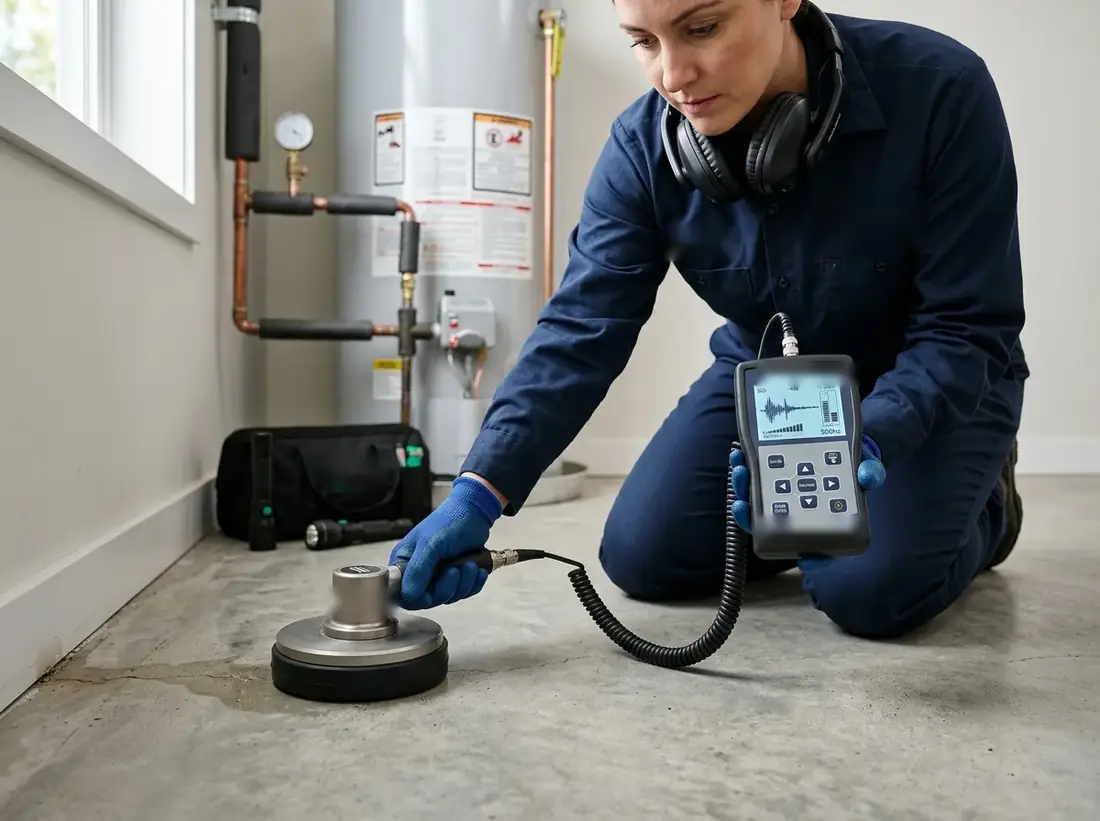
- Acoustic Listening Probes. Sensitive contact probes placed against valves and walls to isolate pipe hiss caused by escaping pressurized water.
What a Visit Usually Covers
- Moisture mapping to measure how far the wet area extends
- Thermal imaging to scan walls, floors, and ceilings for water patterns
- Fixture-by-fixture testing to separate drain, shower pan, and supply leaks
- A clear explanation before any inspection opening is made
Ready to find the leak? A local pro can pinpoint the leak before anything is opened up.
Call (562) 245-5818Hidden Water Leak Detection Across Whittier
We take calls for hidden water leak detection in every Whittier ZIP code (90601–90610). Each neighborhood page explains the housing types and local conditions that affect how leaks show up there.
Hidden Water Leak Detection FAQs
How does thermal imaging find water behind walls?
Moisture alters the thermal capacitance and evaporative rate of drywall. An infrared camera detects these minute temperature differences as dark purple/blue areas, revealing the hidden moisture plume.
Will you need to cut holes in my drywall?
Leak detection itself is non-invasive. We use thermal scans and pinless RF meters through the surface. Small exploratory inspection openings are only made when visual confirmation is required.
The stain only shows up when it rains. Is that a plumbing leak?
Probably not. Stains that track with rainfall usually point to roofing, flashing, windows, or exterior walls. A plumbing leak detection provider can help rule plumbing out, but a roofer may be the right call.
Who repairs the drywall and paint afterward?
Leak detection, plumbing repair, and drywall or paint restoration are often handled separately. Ask what is included before work starts.
How do I know if it is a supply leak or a drain leak?
Shut off all fixtures and watch the water meter. If it keeps moving, a pressurized supply line is likely involved. If the meter is still but the stain grows after showers or laundry, a drain or shower pan is more likely.