
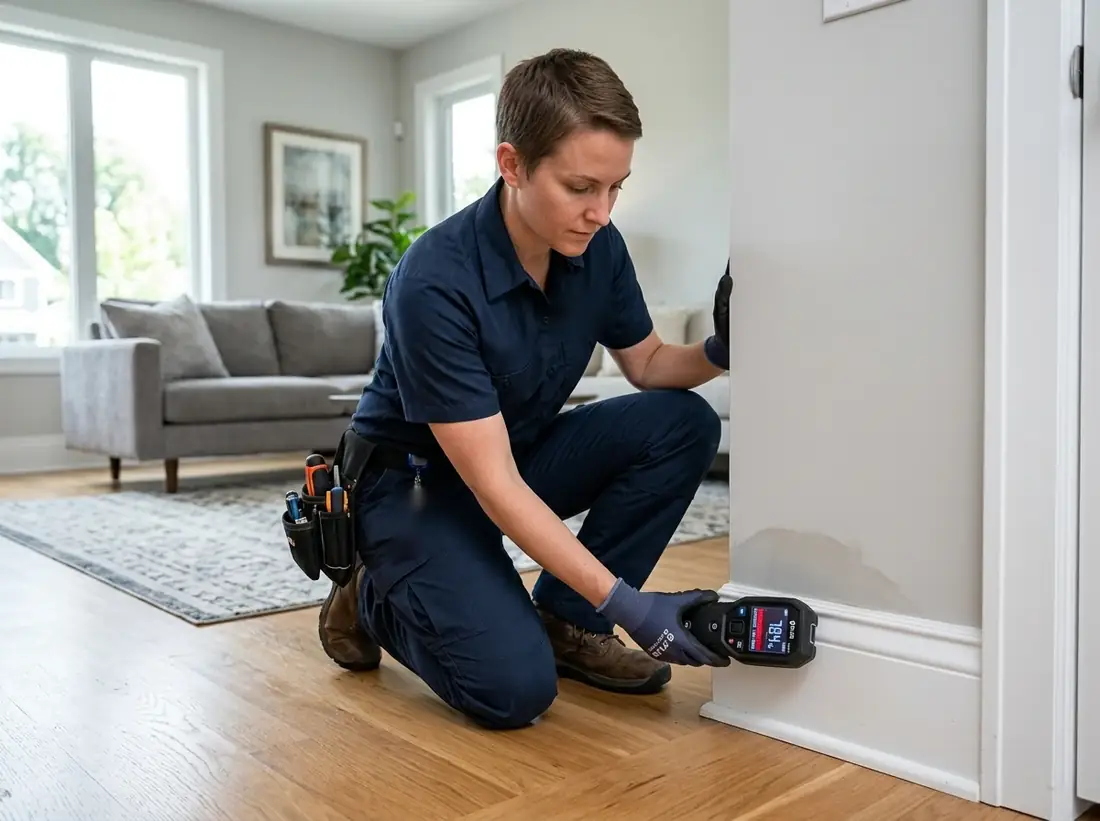
Hidden Water Leak Detection for South Whittier Homes
Older bathrooms with original tile showers are a frequent source — a failed shower pan or worn valve can send water into the wall cavity every time the shower runs. Testing each fixture separately helps tell a shower pan leak from a supply line leak before any drywall is opened.
The stain is rarely right over the leak. Tracing it back before opening a wall saves drywall, paint, and guesswork.
South Whittier at a glance
- Unincorporated Los Angeles County south of the city of Whittier
- Mostly post-war single-story homes on concrete slabs
- Mature street trees and many added rooms or back-yard units
Seeing these signs? Don’t wait for the damage to spread. A local pro can pinpoint the leak before anything is opened up.
Call (562) 245-5818Signs to Watch For
Soft or warped drywall
Drywall that feels spongy, sags, or has swollen seams.
Musty odor
A persistent damp or earthy smell in a closet, cabinet, or room with no obvious cause.
Swollen baseboards or cabinets
Baseboards pulling away or the floor of a sink cabinet swelling and delaminating.
Stain grows after fixture use
A wet area that gets worse after showers or laundry often points to a drain or shower pan.
What the Visit Usually Includes
- Moisture mapping to measure how far the wet area extends
- Thermal imaging to scan walls, floors, and ceilings for water patterns
- Fixture-by-fixture testing to separate drain, shower pan, and supply leaks
- A clear explanation before any inspection opening is made
For causes, testing methods, and repair options in more depth, see our full hidden water leak detection guide.
Common Questions
Do I need to be home for the visit?
Usually yes, or someone with access to the inside of the home, the water meter, and the main shutoff. Confirm with the provider when scheduling.
Who repairs the drywall and paint afterward?
Leak detection, plumbing repair, and drywall or paint restoration are often handled separately. Ask what is included before work starts.
Will they have to cut into my wall?
Not always. Moisture meters, thermal imaging, and fixture testing can often identify the source from the surface. If a small inspection opening is needed to confirm it, the provider should explain where and why first.