
Slab Leak Detection for South Whittier Homes
Because so many homes in the area are of similar age and construction, slab leak detection here usually starts with isolating hot and cold lines, then mapping where they run beneath the floor. If your home has an addition or a converted garage, mention it — the plumbing in the newer section may follow a different route than the original house.
A slab leak runs 24 hours a day under your floor. Pinpointing it first means a small, targeted repair instead of torn-up tile and a bigger bill.
South Whittier at a glance
- Unincorporated Los Angeles County south of the city of Whittier
- Mostly post-war single-story homes on concrete slabs
- Mature street trees and many added rooms or back-yard units
Seeing these signs? Don’t wait for the damage to spread. A local pro can pinpoint the leak before anything is opened up.
Call (562) 245-5818Signs to Watch For
Warm or hot spot on the floor
Most often a hot-water line leaking beneath tile, wood, or carpet. Pets sometimes find these spots first.
Water running when everything is off
A faint hiss or trickle you can hear near a wall or floor, especially at night when the house is quiet.
Meter moves with no water in use
The small leak indicator on the meter keeps turning after all fixtures, irrigation, and appliances are off.
Damp or lifting flooring
Swelling laminate, loose tile, damp carpet pad, or moisture along baseboards with no plumbing fixture nearby.
What the Visit Usually Includes
- Meter and pressure checks to confirm the leak and isolate hot or cold lines
- Electronic mapping of the pipe route under the slab
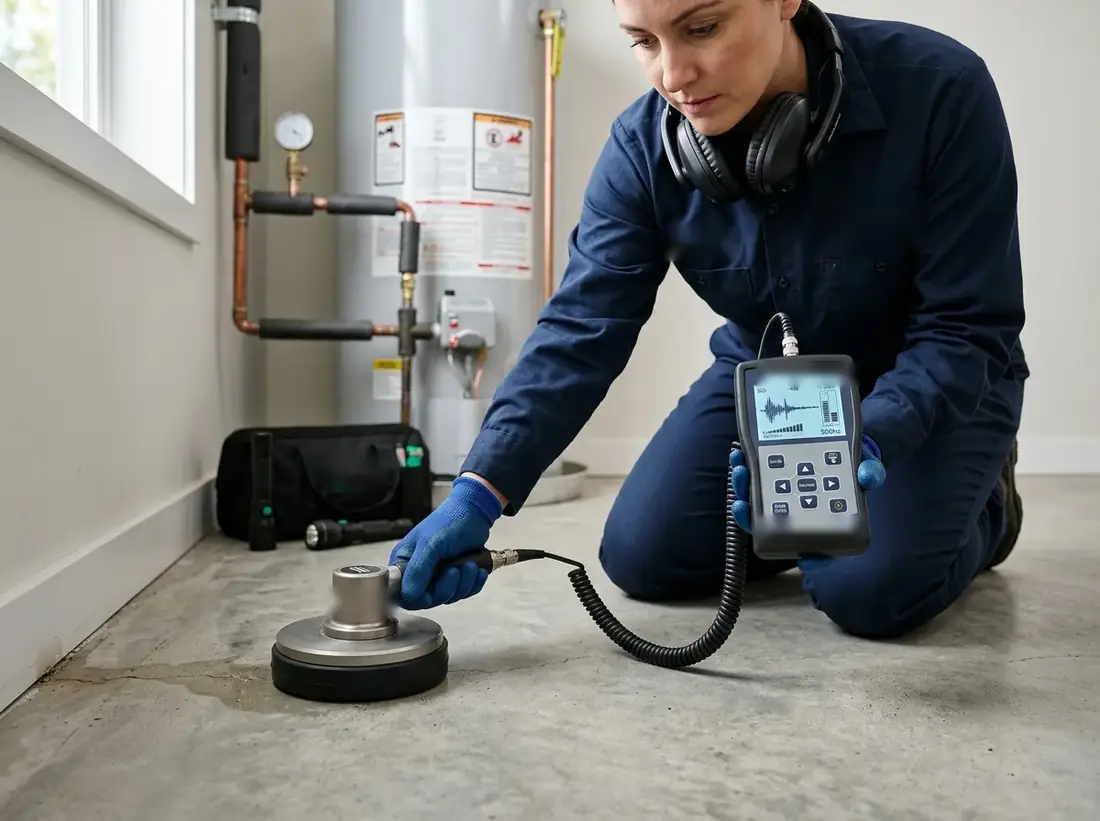
- Acoustic and thermal pinpointing of the most likely location
- An explanation of the finding and repair options before any concrete is cut
For causes, testing methods, and repair options in more depth, see our full slab leak detection guide.
Common Questions
Who is my water provider in South Whittier?
It depends on your street — more than one provider serves the area. The provider’s name is printed on your water bill, and that’s who to contact about the meter or any issue on the street side.
Is a warm spot on the floor always a slab leak?
No. Sunlight, heating ducts that run through some slabs, nearby appliances, and radiant heating can all warm a floor. A warm spot combined with meter movement or a constantly running water heater is a much stronger indicator.
Can a slab leak stop on its own?
Not in any reliable way. A pinhole leak typically gets larger over time, and water under the slab can keep spreading under flooring and into walls while it runs.